The Clock is ticking
to Jesus' return!
Are You Ready?
What is a Shemitah?
The
Shemitah is an ancient Biblical mandate given by God to the people of Israel through Moses at Mount
Sinai. It is a God-ordained year of rest for the land that is to be observed every seven years.
During this Sabbath rest for the land, it is not to be sown, cultivated or harvested. In Chapter 25
of the Book of
Leviticus, God promises bountiful harvests to those who observe the
Shemitah, and describes its observance as a test of Abraham's descendants faith in
God.
Speak to the Israelites
and say to them: ‘When you enter the land I am going to give you, the land itself must observe a
Sabbath to the LORD. For six years sow your fields, and for six years prune your vineyards and
gather their crops. But in the seventh year the land is to have a year of sabbath rest, a sabbath
to the LORD. Do not sow your fields or prune your vineyards. Do not reap what grows of itself or
harvest the grapes of your untended vines. The land is to have a year of rest.’ (Leviticus
25:1–5)
According to the Mosaic law, all grains, fruits, legumes and vegetables must be
harvested and stored for six years. During the
Sabbitical 7th year, or Shemitah, the land lies fallow. All agricultural activity, including
plowing, planting, pruning and harvesting, ceases. Any fruit that grows naturally, without human effort, may be
picked by anyone. According to Deuteronomy 15:1–11, during the Shemitah, all debts, except those
of foreigners, were to be forgiven. On
the final day of the Shemitah year, on Elul 29, all past accounts were to be forgiven and wiped
clean. The Bible also states that a new cycle of seven years begins after the Shemitah
year.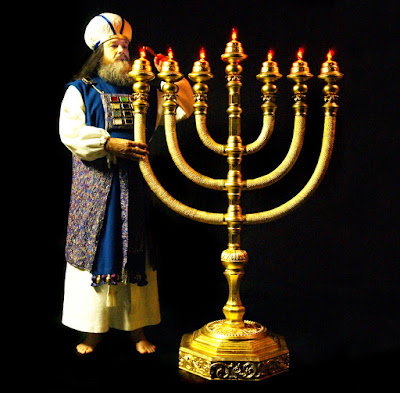
The
number seven (sheva) is prominent in Scriptures (consider the seven-day
week, the Sabbath rest on the seventh day, seven patriarchs, seven-branched menorah, etc.). Many
believers calculate, using verses from the Book of Daniel and the Book of Revelation, that the Last
Days will close with a final, momentous seven-year period leading to the Messiah Yeshua's
second coming to establish His Millennial Kingdom on earth.
The Hebrew word Shemitah can
mean release, but it can also mean shaking, fall or collapse. The Bible makes it clear that
failure to celebrate and honor the Shemitah year of rest and forgiveness is a sin that brings
judgment upon the land and the people. God said, “I will scatter you among the nations and draw
out a sword after you; your land shall be desolate and your cities waste.” (Leviticus
26:33)

In the past, when Israel did not give the Land its required year
of rest every seven years, God exiled the
people so that the Land could have its rest for the exact period of all those years it missed. The
destruction of the holy city of Jerusalem and the exile of the people of Israel to Babylon happened
in the year of Shemitah in 586 BC.